

Work orders are scheduled automatically, equipment performance is visible and spare parts are ready when the job starts.
No maintenance task missed, delayed or undocumented
Every planned and unplanned job is scheduled, approved and followed up in one place. Automated triggers and live status keep your team ahead of the work.
Standardise maintenance once, apply it fleet-wide
A central library of predefined maintenance jobs gives one consistent standard across every vessel — less admin, more time on decisions.
Know the condition of every critical system
One register of all machinery, engines and critical systems — full maintenance history, usage data and condition across the fleet.
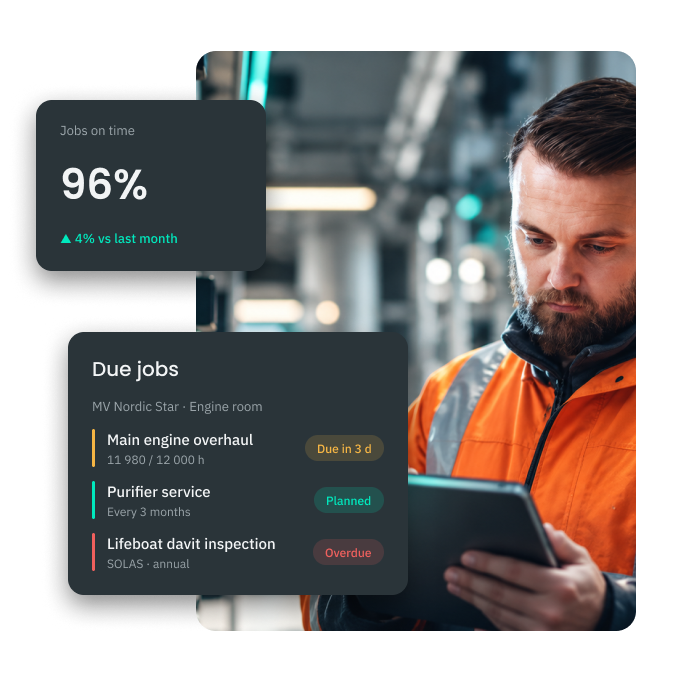
Every planned and unplanned job is scheduled, approved and followed up in one place, so nothing falls between ship and shore. Automated triggers and live status across the fleet keep your team ahead of the work instead of chasing it.
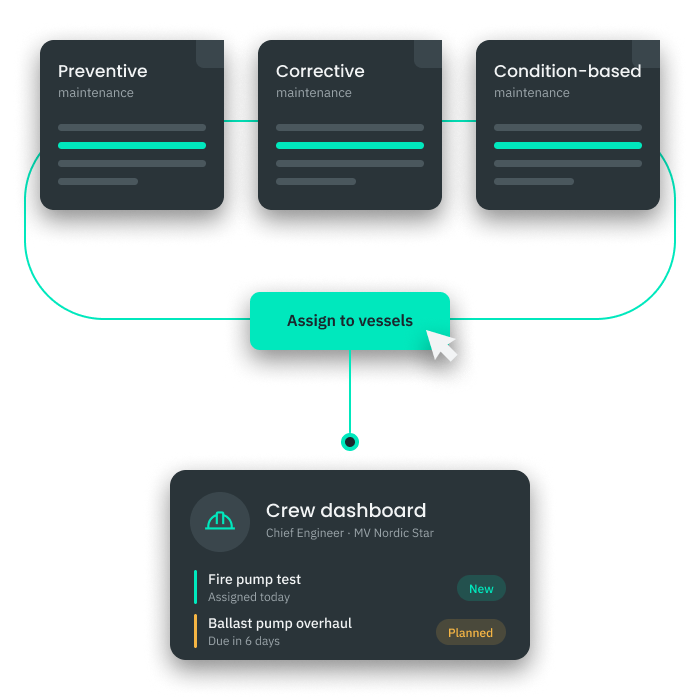
A central library of predefined maintenance jobs gives you one consistent standard across every vessel. Shore teams spend less time on admin and more time on decisions.
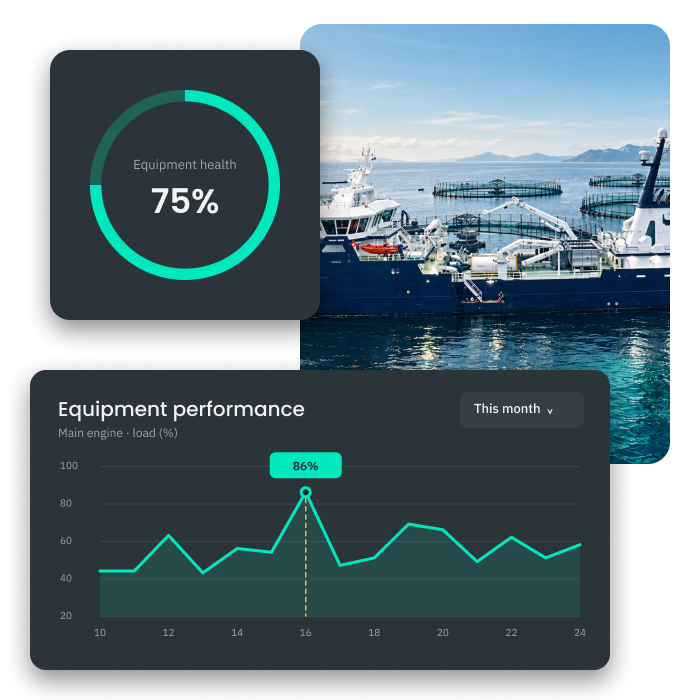
One register of all machinery, engines and critical systems gives you full maintenance history, usage data and condition across the fleet. That means fewer surprises and better decisions on where to spend.

Spare parts inventory is connected directly to maintenance planning, so critical parts are available when needed. Purchase requests are raised automatically before stock runs out.

ShipManager tracks operating hours, wear indicators and performance measurements for all critical equipment. Maintenance is triggered by real use and condition, so you avoid both overdue jobs and unnecessary work.
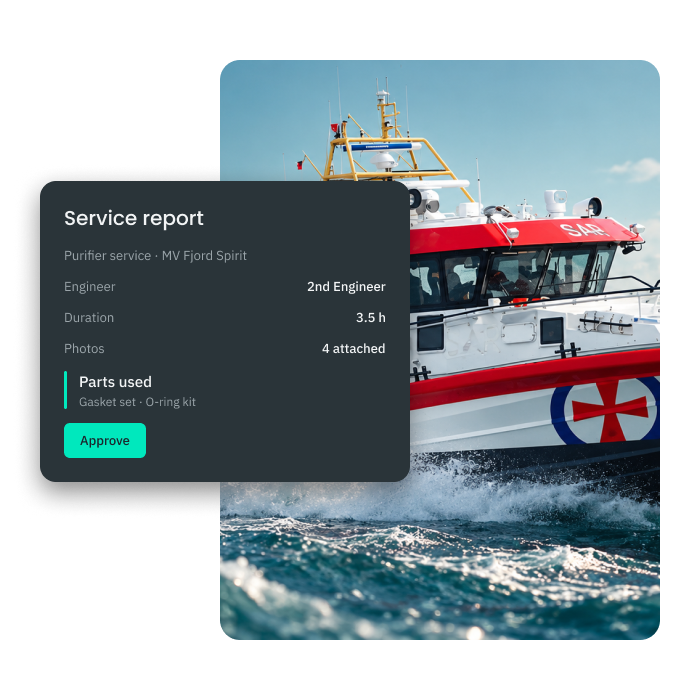
Engineers document every job in a structured way, with evidence and direct links to work orders and compliance requirements. You get a reliable record for inspections and less time spent on reports onboard.
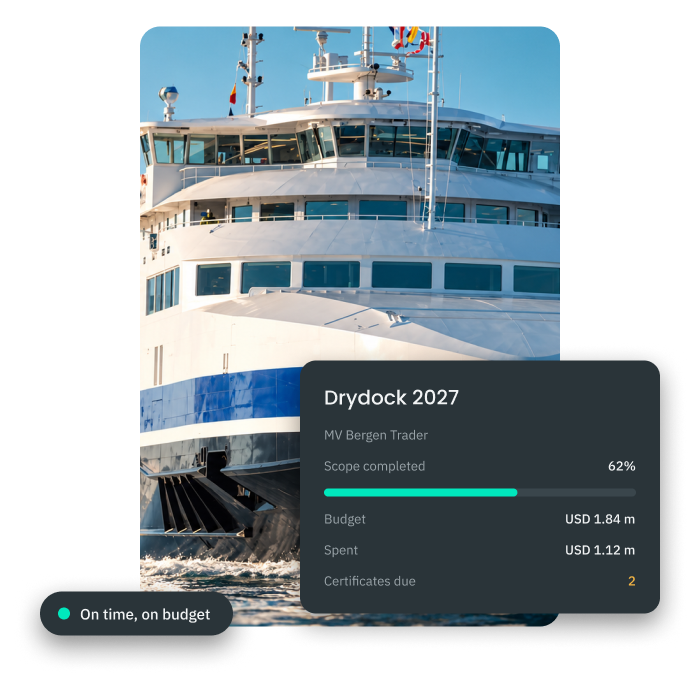
Plan, coordinate and follow up drydock periods in one place, so all maintenance, inspections and certificate renewals are completed on time and within budget.
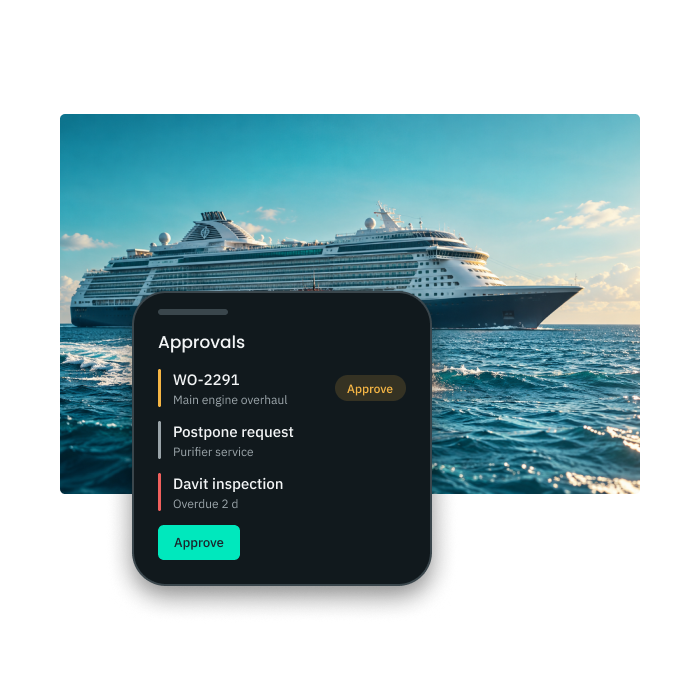
Technical managers and superintendents get real-time access to maintenance workflows while travelling between vessels. Critical decisions are never held up by location.


ISO
27001
Certified